Wordless Picture Books Can Teach More Language

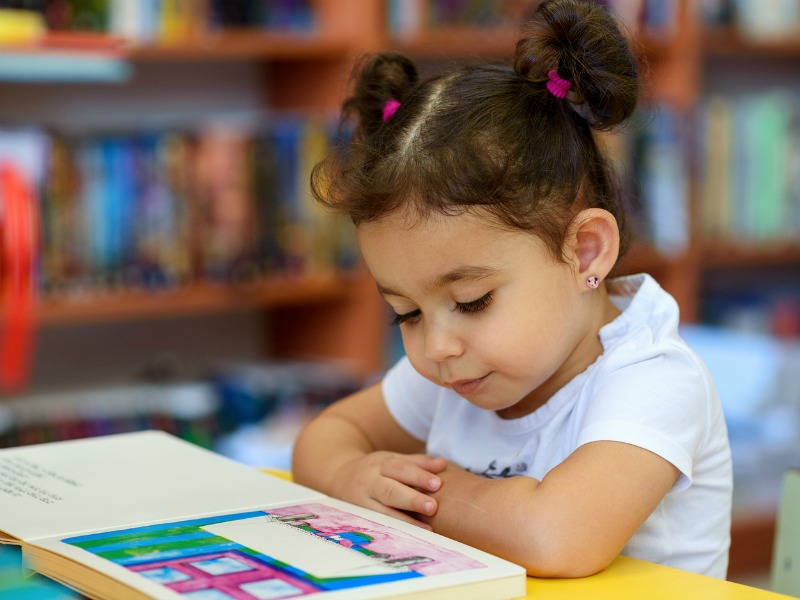
61ayvM3949L._SX285_Last week research came out from the University of Waterloo finding that children hear more complex language from parents when they read a storybook with only pictures compared to the traditional picture vocabulary book. They recorded moms reading to their toddlers both types of books. ”What we found was that moms in our study significantly more frequently used forms of complex talk when reading the picture storybook to their child than the picture vocabulary book,” said Professor O’Neill. They found that mothers often related the picture to the child’s experience or asked them to predict what might happen, both of which build language through higher level thinking.

As speech pathologists we know this to be true. When I speak to new moms groups about reading to their babies, I always tell them to talk about the book, not just read it. I suggest they “Hang out on a page,” which is just what this research is suggesting. Describe the picture, talk about what the animal is doing, where did you see that animal around our neighborhood, what will he do with the nut? etc.

Talking about the connection from one page to the next is fun too. I just picked up a new book, “Green” by Laura Caccaro Seeger which is a Caldecott Honor book for good reason. Exploring all the shades of green and what resides in those habitats, the author also links one page to another with cut outs that become something new on the next page. Leaves jutting out from a tree in “forest green” become little fish following a “sea green” turtle in the coral reef. These cutouts provide a wonderful opportunity for prediction, as kids guess that the section of “lime green” lime might turn into the ladle of a spoon holding “pea green” peas. Take up the challenge of picking up this almost wordless book and provide some enhanced language to feed to your child!

Posted in 3-6 year-olds, 6-8 year-olds, Books, Elementary School Age, Strategies to Encourange Language Development | Leave a comment

My First Day, Comparing What Animals Do On Day One

imgres-5I was in an annual review yesterday for a first grader that I work with and his teacher was saying that next year they will be talking about relating information in a story they read to their personal experience. We have already had some fun with this since my student really enjoys pointing out similarities and connections and then saying, “Book to life!” or “Book to book!”

Today I was reading a new book from the library (for some reason the kids get just as excited as I do when I come with a  book that has a “NEW!” sticker on the book jacket:) “My First Day” by Steve Jenkins and Robin Page lets us in on the first day of life of 22 animal babies from Darwin’s frog, a musk ox, and emperor penguin to a kiwi or Siberian tiger. As we made our way through the book, I began to ask, “What other animal could swim on his first day of life? walk? open his eyes? ride on his mother? or hatch from a shell? My little friend was listening so intently to answer my questions and make the comparisons. I praised him and said, “Good job! Book to book.” and he said, no, “Page to page!” What a fun conclusion he had come to as he gets better command of his language skills.

Posted in 3-6 year-olds, 6-8 year-olds, Books, Strategies to Encourange Language Development, Uncategorized | Leave a comment

Boundaries Baseball Game Teaches Personal Space, Feelings and Saying No

Boundaries baseball coverI came upon a great game today, “Boundaries Baseball” by Franklin Learning Systems, which teaches about boundaries for personal space, feelings and saying “No.” Kids start at home plate on the game board with their baseball player and spin the spinner to see if you get a hit, ball, strike or home run and how many spaces to advance or go backwards. The real learning comes when you land on a space and pick a card from one of the three decks that matches the color of the space you landed on. “No as a Boundaries Baseball red cardsBoundary” cards ask what you would do or feel in certain situations such as, “Name three ways to say “No” to someone. My little friend said, “No thanks,” “No way,” and had to be prompted to say, “I’d rather not do that Sherry,” which we have been using in therapy when he didn’t want to read my choice of book! Red Personal Space Boundaries cards asked players about a situation and if it is a good boundary or a boundary violation such as, “Sheri grabs a book out of Ashley’s hand. Is this a good Boundaried Baseball feelings cardsboundary or a boundary violation?” Explain. Kids can often tell if it is good or a violation but it is harder to explain their answer. Finally, the yellow Feelings Boundaries cards ask kids to evaluate what is appropriate behavior when they are experiencing negative feelings such as, “Name something that is NOT okay to do when you are feeling sad?” Kids were so caught up in the baseball theme that didn’t mind engaging in some learning about boundaries, relating the questions to their experience.

Posted in Uncategorized | Leave a comment

Eco Friendly Pretend Play Toys by Green Toys Build Language Skills

Green toys FerryMy newest PAL Award winners come from Green Toys™  and are great for pretend play to build language skills. Kids these days are much more savvy about eco friendly practices and love to hear that their toy is made in the USA from 100% recycled plastic milk jugs that save energy and reduce greenhouse gas emissions. As parents and therapists, we have to keep our toys clean so I love the feature that they can go in the dishwasher to clean off all the sticky fingerprints. Here are my new favorites:

This Ferry Boat combines three favorite children’s play themes–cars, boats and water! Come aboard for a trip across the tub with a special pull out ramp to glide the two cars onto the ferry. Slide the ramp back into the boat and you are off. Simple but with just enough detail to get imaginations going–ridges to hold the cars in place during a bumpy ride, benches on top for observation, and cleats to tie up the boat–this ferry floats for water fun but was just as much fun on land. Kids were so busy driving the cars in and out and sailing around, providing wonderful sound effects and narrating their story. Children get a lesson in using eco friendly products, knowing their ferry is made in the USA from 100% recycled plastic milk jugs that save energy and reduce greenhouse gas emissions, using no BPA, phthalates, PVC, or external coatings. Moms loved that the hull detaches for easy cleaning and the whole toy can go in the dishwasher!

green-toys-rocket-redBlast off for some eco-friendly pretend play with this space Rocket, equipped with a detachable top capsule and two astronauts suited up for the mission. Made in the USA from 100% recycled plastic milk jugs that save energy and reduce greenhouse gas emissions, this rocket fires up its main and auxiliary boosters to lift off to space. Kids loved loading and unloading the main cavity and nose rocket’s drop down doors with the astronauts who were well equipped with molded spacesuits, helmets, and dual-tank backpacks. “It can transform into a little rocket!” declared a little boy as he unscrewed the top capsule and flew around the room. I knew this rocket was a hit when 2 and 4 year-old brothers were fighting over playing with it. I loved watching the 2 year-old grab the rocket by the nose and take it from room to room to play. Kids get lots of language practice as they provide sound effects and develop their space story!

Green toys TractorKids are so much better educated today on earth-friendly practices that I think they would actually be proud to know that their tractor was made from recycled milk bottles! Green Toys’ first Tractor is lightweight and the perfect size for little hands. Our friends took off with their tractor to pick up some yummy crops to load into the detachable rear trailer. Being able to load and unload adds to the pretend play, as well as a big driver’s seat to add a figure. Parents love this “green” toy, made in the USA which is super safe with no metal axles to rust or external coatings. This tractor can bring the play outside as its big tires navigate wet grass, gravel, or mud (which is often preferred) and start the story telling with little ones.

Available at Green Toys: Click here

The above is solely the opinion of the author. The toys were provided for review by 
Green Toys™


Posted in 3-6 year-olds, Strategies to Encourange Language Development, Toys | Leave a comment

Fun Art Projects for Screen-Free Week

imgres-4I have discovered some wonderful art projects that kids have loved called Artzooka! Crazy name, I know, but that just shows how creative they are AND each set is only $3.99. Let’s start with their “Recycle Sticker Creations” by Wooky Entertainment which is a pad of 250 stickers to attach to recyclables to create a submarine from a plastic bottle, castle and pirate from toilet paper tubes, a turtle from a paper plate or a house from a paper cup, to name a few.  Each creation brought an opportunity for creative play and language learning. Batman hid in our completed castle while the submarine sailed through the house with appropriate sound effects. Have this on hand for creative fun.

imgres-5“Artzooka! Surprise Match Boxes”: This kit even surprised me at how creative it was! A 5 year-old boy assembled the boxes, added the insert for the mouth, glued on noses, ears and bows to make a monkey, dog and robot puppet. The clever design takes this craft kit to pretend play as the outer box slides up, revealing a panting dog’s tongue, robot teeth or a monkey eating a banana. As you slide the box down, it reveals the robot’s mechanical brain. Tell a story with your puppets or hide your special treasures in these captivating boxes.

artzooka-artzooka-cupcake-creations_1Cupcakes are the rage so why not create with their little liners? Recommended for 5 years and up, “Artzooka! Cupcake Creations” is a kit that a 5 year-old can do with little help. My little friend followed the simple instructions to fold her cupcake liners to form a chick’s wing, turtle’s shell, butterfly wings, seahorse’s fan and a salamander’s body. She loved being the commander of the glue, included in the box, as she punched out each animal’s bright colored accessories to add to her creation. We let them dry and then it was play time as they strutted, swam and slithered guided by their creator’s imagination.

How are you spending Screen-Free Week? Let me know what has been a fun change in activity for your family.

The above is solely the opinion of the author. The products were provided for review by Wooky Entertainment


Posted in 6-8 year-olds, Toys | Leave a comment

PAL Award Winners on NBC CT Yesterday

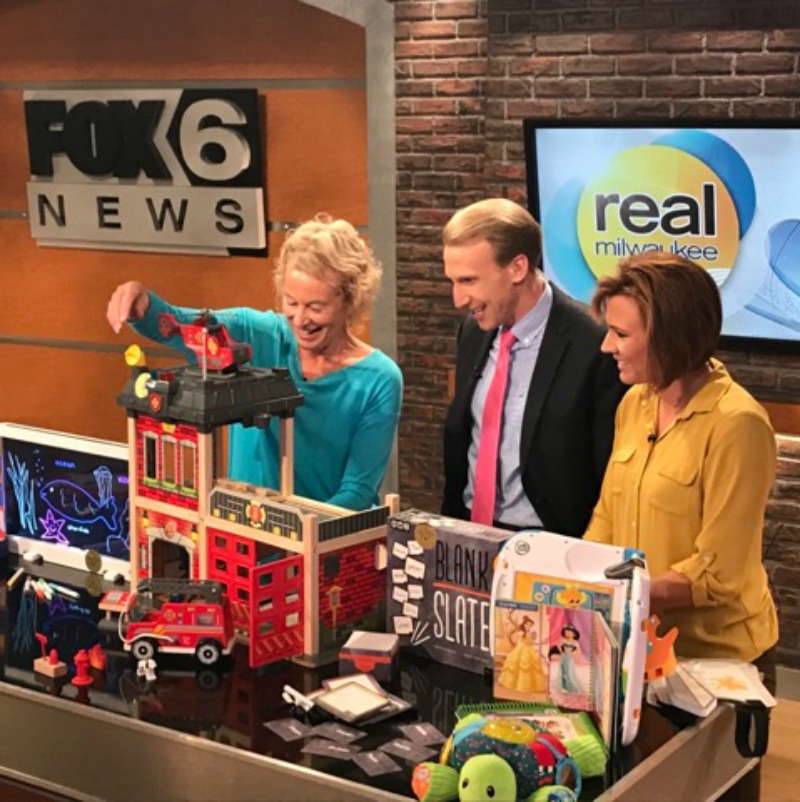
TV shot 4-13I enjoyed my interview on NBC CT yesterday. It is always fascinating to watch their news hour produced. It’s much like an 8 ring circus if there is such a thing because their anchors are so professional, reading the news or delivering the weather while producers are moving pieces of the set right next to them. We always get a lot of attention as we carry and wheel in our toys for the segment. I have to say that we had a staff person engage us about every one of our PAL Winners. From a woman who had to touch the Alpaca puppet and wanted to know where she could get it for her 16 year-old who loves alpacas, to just about every parent of little kids who claimed they wanted a ride on the “Easy Turn Coupe.” Here is the information of the PAL winners featured today:

On the Farm, Who’s in the Barnyard? by Ravensburger (2 and up,$21.00 )

  • Wonderful set for toddlers part puzzle–pop out the windows and door to play peek-a- boo, pretend play–characters, animals and vehicles to move around and talk, start a story, a first matching game,
  • Excellent instruction guide for parents on how to build vocabulary, ask age-appropriate questions, and encourage free play
  • Full review and where to get it.

Wummelbox (3-8 years, subscriptions, $24.00 and up )

  • Arts and crafts kit packed with learning, themed box arriving at your door each month,  subscription service with 3-4 projects with high quality materials.
  • Nutrition box-decorate an apron, make and stuff vegetables to sell, and turn the box into a cash register, play a game
  • Full review and where to get it

Teenage Mutant Ninja Turtles Clash Alley Strategy Game by Wonder Forge (6 and up, $17.00)

  • Wonderful first strategy game, Teenage Mutant Ninja Turtles are so hot
  • Turtles race through the 3 D warehouse, up and over containers earn and strategically play action cards to defeat villains to complete their mission
  • lots of language of math, add up points, talk about greater than and less than to defeat the villains
  • lots of talk in this game, element of pretend play
  • Full review and where to get it

Folkmanis Puppets: Alpaca, Little Hands Hedgehog (3 and up, $13-44)

  • Folkmanis makes beautiful, realistic puppets so kids can enter their pretend world and take on roles, practice their language skills
  • Alpaca,and Hedgehog-designed for a kids’ hand, place for each finger
  • Facts of Interest which can give a child a starting point for their story, hedgehog rolls up for defensive mode held together with a magnet
  • Full review and where to get it

Easy Turn Coupe by Step2 (1 1/2 and up, $60.00)

  • Great pretend play with a working gas cap, horn, ignition key
  • Push a toddler or take out the floor board and a 4 year old can propel the car himself
  • Full review and where to get it

Western Fort by Playmobil (4 and up, $150)

  • Soldiers keeping guard from their walkways, raised lookout tower with warning bell, working cannon
  • Exquisite attention to detail, roll up their bed rolls and attach to saddle, bugle, munitions box, Native American Indians
  • Pretend play, story changes every time, storytelling helps prepare for reading and writing
  • Full review and where to get it


Posted in 3-6 year-olds, 6-8 year-olds, 8 years and up, Strategies to Encourange Language Development, Toys, TV | Leave a comment

Lesson Plans for Screen-Free Week: Pretend, Play, Talk

Ben playing gameTurn off the TV? Set aside the iPad? Give up video games? That’s just what millions of people will be doing April 29-May 5 as they turn off screens and turn on life.  We all see our kids pick up information and dare we admit “learn” from a TV show or ABC app but what are they missing while they watch or tap a screen?

Children learn language through social interaction: babbling back and forth with a parent or caregiver, imitating words heard within the context of their day, combining words into first little sentences to make their needs known, or engaging in conversation about their day. What’s the best environment to learn language?

Babies benefit from a quiet setting since they have more difficulty distinguishing foreground sounds (like calling their name) from background noise (TV, music or loud noises). Since infants are capable of hearing small distinctions between sounds, providing an environment with a quiet background allows babies to be amazing little scientists and decipher language. Toddlers learn from multiple repetitions of a word as they start to speak their first word around 1 year of age, using combinations like “blue ball” or “more milk by 2 years of age.

A popular study by Hart and Risley found that the number of words spoken to a child from 1-2 years of age was linked to language accomplishment at age 3. Many studies have suggested that watching television, a passive activity, impedes learning by inhibiting a child’s opportunity for verbal interaction. A recent study published in the Archive of Pediatrics and Adolescent Medicine reported that when parents get drawn into the TV-watching too, interaction drops and fewer words are spoken, affecting parent-child communication and language learning.

That being said, I always counsel parents about setting limits and finding a balance for their family. I’ve been in homes where parents allowed no TV and others where there was a TV on in many rooms as background noise. I understand the benefits of having a child occupied while we start dinner or just need some down time, but be informed on the content available.  Play the video games, watch the shows with them and set limits, allowing plenty of free play time to exercise language and learning.

Feeling a little anxious about how to fill the time during Screen-Free Week? Here are some suggestions to keep you thoroughly engaged with family and friends:

Play a game:

41C9YiBAZBL
Kids love Teenage Ninja Turtles Clash Alley Strategy Board Game by Wonder Forge as they slip into the role of Donatello or Michelangelo, running, climbing and leaping across the 3-D warehouse board. The language of math prevails as kids help each other add up attack points, discuss greater and less than and plan strategy to complete their mission. This is an excellent first strategy game for kids 7 and up.

18-123-Product_Primary_Image-thumb

I never knew reading in circles could be so much fun! Players race to unravel the word and shout it out to win a card.  WordARound by Thinkfun is addictive as players strengthen spelling, reading, language and vocabulary.

GMC4_SPREADThe race is on in the The Great Cheese Chase by Peaceable Kingdom, as the three mice scamper up to the attic for a large wedge of cheese with Tiger the Cat on their heels. The learning never stops in Peaceable Kingdom’s cooperative games. Along with following directions, cooperating, and making group decisions, players are building language skills as they discuss strategy options, explain the reasoning, and encourage each other to make the best move.

janod stacking pyramidInvite your toddler to play a stacking game with Racing Round Stacking Pyramid by Janod. There is so much to talk about as you describe the gorilla, lion, giraffe or duck, careening down the road in their little vehicles, of course wearing their helmets. Match numbers, colors and shapes as you continue the path.

 Put on a puppet show:

ShowLarger()-1Folkmanis’ Little Hedgehog Puppet just joined his specially sized friends to delight little ones as they fit their hands into the animals, with a place for each finger. Tell your story as he wards off enemies by rolling up into a spiky ball, thanks to magnets that help his disguise.

imageResizeSet up the HABA Puppet Theater, open the little red curtains and the show begins.  Practice storytelling builds language and prepares children for later reading and writing. This stage swivels into a store counter and 2 hanging boxes to extend the play for a little retail later.

419J13amq0L._SL500_AA300_Thanks to Puppet-on-a-Stick’s  unique design (by Educational Insights), kids can hold the character and operate his mouth while pulling down the lever on his stick body. Delighted to be able to independently operate these alien looking creatures, children jump right in to pretend play in the traditional sense–behind a sheet or curtain, popping up to announce or participate in the puppet show, or walk around like a puppeteer with the world as their stage.

Join in your child’s play whether it be a board game, puppet show, or pretend play. Experiencing play with your child is priceless, and who knows, you may not even miss the screens.

The opinions expressed are solely those of the author. The above products were provided by their companies for review.

Sherry Artemenko M.S., CCC-SLP,  speech language pathologist for over 35 years, is the founder of the PAL Awards (Play Advances Language) which distinguish the best new toys, games and books that have the DNA to build language skills in children. Through her private practice, Play on Words LLC and work in the schools, she has served kids for over 15,000 hours. Her popular blog, http://www.playonwords.com/ shares insights and tips with parents, educators and therapists on how to build speech and language skills.


Posted in 3-6 year-olds, 6-8 year-olds, 8 years and up, Games, Strategies to Encourange Language Development, Toys | Leave a comment

The Ant and the Grasshopper, A Lesson in Descriptive Language for Speech Therapy

9781596434936Readers are drawn into the vibrant collage of colors on the first page of The Ant and the Grasshopper,  ”Somewhere on the boulevard of backyards an ant was struggling with the remnants of a picnic.” Each page is equally as rich, packed with delicious vocabulary for young minds. The ant grew weary dragging her chunk of watermelon hoping  for “the smallest of breezes to cool her blistering forehead,” when she perked up to some magical music, thanks to a grasshopper buggy band. “Hoisting her load a little higher,” the conscientious ant didn’t take up the grasshopper’s offer to come grove with them, but forged on with a lighter heart. Appreciating the audience, the band decided to hit the road and accompany her home. At home, the ant was so thankful for the joyous noise, she wanted to repay the band, inviting them underground to a cooler venue, “making everything brighter.”  This picture book is loaded with concise, descriptive phrases, teaching more advanced vocabulary for the younger set. Too often picture books dumb down the language (I’ve even been told that by authors who have been instructed to keep it simple from their publishers), loosing an opportunity to build kids’ vocabulary. I’ve used this book to teach descriptive language and also to learn new words like, hoist, burden, heave, blistery, persevere, or weary. Thankfully these authors loaded their book with rich language.


Posted in Books, Strategies to Encourange Language Development, Uncategorized | Leave a comment

Penguin and Pinecone, A Friendship Lesson For Speech Therapy

imgres-2I love Penguin and Pinecone by Salina Yoon for language lessons because of its simplicity in storyline and illustrations which leaves a lot to talk about that is implied. Penguin discovers “something curious,” a little pine cone in the snow. He couldn’t figure out what it was but felt that it was cold so got busy knitting a little scarf, just like his, for his new friend. He went sledding, swimming and played catch with Pinecone but got no reaction. Wise Grandpa recognized that Pinecone belongs in the forest, not on the cold ice.  Penguin packed his sled, braved the cold and arrived at the forest. After making a cozy nest of pine needles, Penguin placed Pinecone in the hot forest and returned home. He couldn’t stop thinking about how his friend was faring. Penguin returned to the forest to a grand surprise. So many clever details provide added commentary to the story. Kids have actually seen things that I haven’t! I’ve used this book to

  • Talk about comparisons: too brown to be a snowball, too hard to be food
  • Describe the action of Penguin and Pinecone when they play
  • Brainstorm, “What would you take on the journey?”
  • Predict what will happen to Pinecone after he was left in the forest
  • Compare before and after pictures of Pinecone wrapped in his orange scarf, placed in his nest between the large evergreens, the heart of stones encircling him,  with the scene when Penguin returned to see a large pine tree.
  • Talk about friendship–what you like to do with your friend, how you can help a friend, or a visit to a friend
Posted in 3-6 year-olds, Books, Strategies to Encourange Language Development | Leave a comment

Lessons To Build Conversation in Speech Therapy

conversation buildersSome of my favorite therapy lessons are spontaneous, based on materials I discover when I arrive at a house.

Today I was greeted by a first grader who had just visited his school Book Fair. He was gripping his new Predators (Smart Kids) book by Priddy. Just the cover told me that kids would love this book–its scared me! But, when I opened it up, each page had several facts about an animal including a cheetah, grizzly bear, tiger, or piranha to name a few. A chart on each animal page compared the size of the animal to a man, rated how vicious and deadly it was by the number of skulls (5 was the worst), and told how fast it could move.

Predators bookWe read the page, discussed the chart including such facts that a cheetah can accelerate to 60 mph in 3 seconds. Then I closed the book since one of my goals with this child is to build comprehension skills based on the text, with diminishing visual aids. Finally, we began a conversation about the animal and added a  foam shape each time we added to the conversation appropriately. I offered my friend the option of starting or I could start the conversation with a comment about what we found interesting or a question. After we read a few of the animals, we had more to talk about as we could compare sizes, how fast they were or where they stood on the continuum of viciousness.

I was so proud of my little friend when I asked him how the wolf was like a cheetah. He said, “If he’s alone he eats rabbits and birds but if he’s a pack, there’s a group of wolves, they could bring down big animals.”

Posted in 6-8 year-olds, 8 years and up, Strategies to Encourange Language Development | Leave a comment