Teaching Inference With Political Cartoons

http___www.teachingushistoryI really enjoy the variety in my caseload, from getting an 18 month old to talk to working with an 8th grader with language learning disabilities. It’s kind of fun at the end of the day to sit in an adult chair and talk about the Cuban missile crisis or the Vietnam War and it’s implications, after a day with Playdoh. I use the student’s curriculum for social studies as well as science to teach inferential thinking as she is required to know the “why?” behind certain political decisions throughout history and how these decisions have influenced people as a result.

I noticed that one of the areas that she did poorly on her social studies tests was interpreting political cartoons. She even told me that was hard for her. So we searched the internet and found some great sites with cartoons and their explanations regarding the Vietnam War.

This site has “Vietnam War: Sacrifices and Outcomes” containing 6 political cartoons followed by 4-8 questions helping the student get at the meaning of the cartoon. First we examined the cartoon and talked about it in the literal sense. In one cartoon, Uncle Sam is in a boat fishing outside the rings of a whirlpool whose outer ring says “Vietnam” and as it gets closer to the middle, “Still Deeper Involvement in Asia”. We talked about a whirlpool and what happens as you get closer to the middle and then moved to the facts about involvement in the war and what is inferred by this cartoon? The 4 questions following the cartoon, help the student get at the meaning and ultimately give their opinion on the issue:

1.  What do you see in this picture?

2.  Describe the demeanor of the man in the boat- does he look concerned that he’s approaching the whirlpool?

3.  Once you get pulled into a whirlpool you can’t get out.  Why could “deeper involvement in Asia” be considered a whirlpool?

4.  Knowing that it would be difficult for America to leave Vietnam once they were “sucked in,” should we have entered this conflict?

Another excellent site, teachinghistory.org, “Analyzing Attitudes on the Vietnam War Through Political Cartoons, also shows several cartoons with a thorough explanation of the political events behind the cartoon.

Taking a little time to show how to examine a political cartoon and interpret it, gave my student a new confidence in taking her tests.

Posted in 12 years and up, 14 years and up, Language, Strategies to Encourange Language Development | Leave a comment

Break Out Summer Learning With a MoonScope, Microscope or AquaScope

prod5351_dt

Thanks to Bob Artemenko for today’s guest blog. Bob is the other half of our PAL Award team, CMO, as well as a pilot and star gazer. 

Of all the kid’s activity-series you might consider this summer, Educational Insights’ Exploration Tools and Activity Journals, under the banner of “Nancy B’s Science Club,” is a must have. There are five tools in all, and while most may not own all five, great experiences will drive many to seriously consider a second or third. Reasonably priced, good quality, and drawing on a uniform  approach to instructions, scientific method and journaling, the set consists of:

  • 400X dual light and dissecting Microscope with dozens of activities and a bundle of accessories that will keep your budding Madame Currie occupied for weeks
  • 90X MoonScope Telescope with two glass eyepieces, a moon filter, tripod and red LED that allows you to journal while protecting your night vision
  • 5X AquaScope with three bright LEDs allowing young Cousteaus to peer into the murkiest ponds to detect the germ-y, the worm-y and the squirm-y
  • …and also Wildlife Binoculars and a Forensic Crime Solver Scope, both with instructive activity journals

Where to begin. I keep wanting to go to the overall ingenuity and uniformity of this great series. Each set has it’s own tool which is well constructed, described and accompanied by instructions which explain its usefulness to the scientific method. Ah “method,” that is the unique element of this series. Each set informs young explorers in a readily understandable and documented manner how to use these tools to learn more about the world around them. Whether looking at craters and mountains on the lunar surface, the backlit beauty of salt crystals or mosquito larvae swimming in a backyard puddle, the richness of this whole series is tied to the way scientist Nancy B. uses words. She uses them to describe how interesting, exciting and fulfilling it is to inform yourself with these unique gadgets. Having completed exercises and experiments, you then use words and language to record your learnings. Multiple observations evolve to discovery, sparking  understanding, leading to better informed and competent people, and maybe some day, preparing a young scientist to pass knowledge along to others!

All five tools deliver on “discovery” sparks, but the microscope and telescope I found most compelling. So much of our world is accessible to the magic of the microscope’s gaze. A piece of wool, granules of sugar, a grasshopper leg, an engraved letter on an invitation or a tomato seed all invite exploration. These new sights generate excitement giving off lots of descriptive language and opportunities to learn and use new vocabulary. While the Moonscope is mostly a nocturnal exercise, the mysteries of the night sky have always called man to closer inspection, and while it’s hard to go beyond spotting the rings of Saturn and the moons of Jupiter – be ready for some merrymaking-with-the-moon. Identify specific features, see where the lunar module landed back in 1969, work in your journal to record the phases and changes in the moon over the month. Intently studying our nearest heavenly neighbor builds the interest, skills and patience to then move to more delicate journeys across the sky. Soon it will become time to view constellations and then, likely with some adult supervision, investigate stellar phenomena highlighted on the internet and in local print media. For example, during this June, 2013, Mercury, Venus and Saturn are all visible for about an hour after sunset. WOW! Sorry kid, back away from the Moonscope, I gotta see this !

The opinions above are solely those of the author. The Nancy B. Science tools were provided for review by Educational Insights.


Posted in 8 years and up, Language, Strategies to Encourange Language Development | Leave a comment

Auditory Discrimination Lessons in Articulation Therapy

Articulation station thSoon after I get into articulation therapy with a child and they can make their error sound correctly, I find myself playing little games to improve their discrimination between their error and correct sounds. Today was a funny one. My little guy has been working on /l/ and is pretty consistent in producing it correctly in sentences, but lately has been generalizing it to all his /r/ and /w/ sounds which really diminishes intelligibility! So, I wrote the letters R, L, W across the bottom of my paper and asked him to point to the letter that represented the sound in the word I said, “witch, rake, like, etc.” I was surprised that he was able to get them all right. Interestingly enough, he stopped generalizing so much after that. Another technique I use is I tell my articulation students if they correct their error sound during a lesson, they get 5 √’s instead of the usual one. (I usually use the iPad app, Articulation Station, where you tap a √ or x after a response and hear a positive or negative sound.) It really excited the kids and gets them monitoring their responses. I thought I was really making progress today while working on/th/ when my student asked me the difference between the sounds in “thank” and “this.” I said, “Good question!” and had him hold his hand to his neck to feel the vibration and silence for the two sounds. Then he said, “I know, the thank sounds like /f/ and the this sounds like /d/!” He just described his system of substitutions, and I thought I was teaching him the difference between voiceless and voiced consonants. I had a good laugh.

Posted in 3-6 year-olds, 6-8 year-olds, Articulation | Leave a comment

What Constitutes A Good Language Toy?

BJT021-1I’m constantly teaching parents and toy manufacturers what constitutes a good language toy. I demonstrate good and bad options and today I want to share a toy to which I just awarded the PAL Award for its language learning potential.

The “Rural Road and Rail Set” by Bigjigs Toys gathers kids in with the 3 car magnetic train and tracks as well as road track for wheeled vehicles but it is the props that generate play across many themes. A lake, policeman and traffic signs, farm animals, fence pieces, hay, milk truck and tractor,  nurse and children, and mechanic invite story lines across many themes that can intersect or take on their own direction. My little friends fenced in the animals, transported the hay for feeding and held the cow over the milk truck, pretending to squeeze and declaring, “There’s no more milk!” before the truck left down the roadway.

Great language toys have flexible props that start the play but don’t dictate it by being too closed rather than open ended. Our nurse treated the sick animals and mechanic fixed the train as well as the farm’s tractor. Here is my full review:

Get your engineer buddies and hop on board this new Bigjigs Rural Road and Rail Set chugging into town.  The 80 pieces of fun include roads, trees, buildings, street signs, fences, characters,  animals, a lake, and of course trains and vehicles.  Children loved assembling the winding track so the magnetized locomotive cars could race over the elevated bridge and through the crossing before the gate closed. Intersecting roads allow the ambulance to rush to the hospital, a dairy truck to deliver milk from farm to market, and cars to drive about. Colorful accessories stimulate creativity and category thinking  about farms, hospitals, towns, police and transportation which spawn story lines on many levels and themes. Great dialogue is sourced from a broad cast of characters – a conductor, nurse, police officer, and children. Wonderful pretend play iterates and evolves as kids move them about the set,  rearranging the props, using their imagination to design a community. Our three and six year-old girls enjoyed bringing the horse, pig, and goat back and forth to the nurse via the railroad cars for a little tender loving care, while a little boy held the cow over the milk truck and squeezed to load it up for delivery!  One friend exclaimed, “When will I be able to play this again?’ Mom got in the act commenting,  ”It’s kind of like a dollhouse, as you get to play with the characters and change up the story.”

Available at Bigjigs Toys: Click here


Posted in 3-6 year-olds, 6-8 year-olds, Language | Leave a comment

Easier To Raise Math Than Reading Scores Teachers Say

Smartimals DuncanIn a fascinating article in the New York Times last week, “In Raising Scores, 1 2 3 Is Easier Than A B C,” the author quotes several teachers who find bringing up math scores is a lot easier than doing the same for reading, as kids reach the middle school years. Teachers felt it was easier to assess where kids needed work in math, while more difficult to assess and teach the complex concepts of language such as vocabulary, sentence length,   comprehension  etc:

“Is it a vocabulary issue? A background knowledge issue? A sentence length issue? How dense is the text?” Mr. Peiser said, rattling off a string of potential reading roadblocks. “It’s a three-dimensional problem that you have to attack. And it just takes time.”

Studies show that teachers have a greater impact on math test scores than English test scores and the answer might be back at the beginning when kids were preschoolers. We know the importance of early language learning and its impact on later reading comprehension, so when kids get behind in the first years of life, it is harder to catch up in reading than math.

“Teachers and administrators who work with children from low-income families say one reason teachers struggle to help these students improve reading comprehension is that deficits start at such a young age: in the 1980s, the psychologists Betty Hart and Todd R. Risley found that by the time they are 4 years old, children from poor families have heard 32 million fewer words than children with professional parents.”

I’m glad that language and reading is finally getting the attention it deserves as an important bedrock for all learning. As science and math curriculums require more and more collaboration, journaling and inferencing, language proficiency affects outcomes.

Maybe everyone will listen a little closer now to the message of the importance of language learning and play in our children’s early years to build essential skills to later academic success.


Posted in Uncategorized | Leave a comment

Toys Spotted on Vacation from Neighborhood Toys Stores to Bath Shops

Evans-13Vacation for me always includes some scouting for new toys, I just can’t help myself!

Maybe some of you remember my outing to Evans Variety Store last year in Kiel, Wisconsin. This year I couldn’t miss checking out their flagship store in Sheboygan Falls which is also  floor to ceiling stacks of everything you might need, especially toys! Founded in 1936, Evans has more than 18,000 square feet of products including sewing notions, clothes, artificial flowers, Wigwam socks and figurines.

People are always talking about Evans fondly, saying if they can’t find something, they always find it there. Playmobil sets lined the better part Bemis bathtubof an aisle.  Other favorite PAL winners from Blue Orange Games, uKloo, Gamewright and Educational Insights were mixed in with classics from the past. I can honestly say I have never seen so many games in a specialty toy store! So much is being said about the competition with big box stores and the slow demise of the neighborhood toy store. Just come to a small town in Wisconsin and see how locals rely on a very special store.

After the Evans experience,  I walked across the street to the Bemis Bath Shop.  Bemis is a global manufacturer of toilet seats, located close by. They had a display of every color and pattern available as Bemis toilet seatwell as a kids’ design area which caught my eye.  The tub full of bath toys was inviting but it was the NextStep toilet seat with an option to snap in a kid sized seat in various colors that got my attention. What a great idea! Say goodbye to all the cute little potties that you have to empty and have a kid option right on your toilet seat. Understand that this area of the state is home to Kohler Wisconsin, famous for their kitchen and bath products. You could easily spend a rainy day (and we have) stepping in and out of tubs or checking out the many faucets and sinks.

Next stop was my favorite coffee shop in Elkhart Lake, Wisconsin, “Off the Rail Cafe,” located in the old train depot. Packed with Off the Rail gamesfamilies I noticed while the parents ordered lattes and mochas, the kids selected a game and settled in at the table to start to play! Grandma and grand daughter were deep in a game of “Jenga” while another family was playing “Sorry.” Family game night started early over coffee.

Posted in Toys | Leave a comment

Great Apps For Speech Therapy: Rainbow Sentences by Mobile Education Store

Rainbow Sentences-sharkI want to share my latest experience with another outstanding app from Mobile Education Store, “Rainbow Sentences,” designed to help students create grammatically correct sentences using color coded cues.  You can select the settings to give your students the highest level of prompts, color coding phrases to correspond to “who,” “what,” “where,” and “why” as the sentence is constructed, or remove the color coded cues as well as words clumped in phrases and have the student construct the sentence correctly one word at a time. For example, “(The shark)  (is chasing the worm) (on the hook) (because he wants to eat him.)” would be offered as single words all in black, making the task much harder.  Kids loved dragging the blue subject phrase to the blank blue line and dropping it off to Rainbow Sentences-explainstart the sentence. If you get stuck, just press “Play Lesson” and the different components of the sentence will be explained, again with colored boxes corresponding to the different wh-questions answered. My kids started to realize what component they forgot in a good, grammatically correct sentence, such as “where” or “why.” The visual reinforcement in this app was so helpful to them.

After a student drags the correct phrase to the corresponding colored line he taps “I’m Done!” and the narrator repeats the correct sentence and says, “Now let’s record the sentence.” Kids easily tapped the Record button and repeated their correctly competed sentence. This reinforcement of reading and listening to their own response was so helpful in teaching them ALL the components to a well constructed sentence.

Rainbow sentences-beaverI only used Level 3 which I have described but the first two levels are simpler, Level 1 including only 2 phrases, “who” and “what,” while Level 2 has three phrases, “who,” “what” and “where.”

Of course using this app gets even more fun as we go outside the box so to speak. I found it very helpful with kids on the autism spectrum and with word-finding difficulties in teaching them descriptive language. I have some students who tend to give short, uninteresting sentences in describing a picture book or experience. The colored boxes in the “Play Lesson” showed them visually that there are many parts to add to a sentence to make it meaningful. Since we all love the cartoons, I began by covering up the text below the Rainbow sentences-puzzlepicture and asking the student to describe the picture. Then I showed them the jumbled phrases, they dropped them in place and read the sentence. One little boy looked up at me and said, “I forgot that one!” meaning he forgot one of the phrases (usually in his case it was the “where”) and started to check and see that he included that information the next time. The cartoons definitely require some inferential thinking which adds to the learning.

My students love this app and stay engaged because of the clever cartoons and recording option. Top it off with earning puzzle pieces with correct answers that come to life when they are completed, and it is a favorite. My kids were counting how many more sentences they had to complete to earn their prize!

Obviously this is a great learning app for kids with special needs as well as their typical peers.

“Rainbow Sentences” was provided for review by Mobile Education Store. The above opinions are solely those of the author.


Posted in 10 and up, 6-8 year-olds, 8 years and up, Apps, Speech and Language Delay, Strategies to Encourange Language Development | Leave a comment

Alphabet Anatomy: Meet The Capital Letters Teaches Kids The Alphabet

imgres-1Learning the alphabet, all 26 letters, can be daunting. Some pick it up quickly through repeated exposure to educational TV shows, DVD’s, books, and toys. Others seem to need a little extra help. There is so much to learn. Kids need to memorize the shape or the letter, how it is made, its name, and the sound it represents. Author Linda Ann Jones has made learning a little easier with her book, “Alphabet Anatomy: Meet The Capital Letters,” as she pairs each capital letter with a rhyme describing it’s shape to help kids visually and auditorily remember how to form the letter. The book starts out with one of my favorites, “A has a point at the top of her head. Under her belt she hides apples so red.” The catchy rhyme is easy to memorize for quick reference when a child need to remember the pointed letter with a lined “belt” across the middle. Offering this multi-sensory approach, the author assists children in learning and recalling how letters are made. Here is the full PAL Award review:

Looking for a fun and clever way to introduce your child to the alphabet?  “Alphabet Anatomy: Meet the Capital Letters” is a wonderful way to do just that. Every page of this book presents a capital letter A to Z as an interesting character. Each letter has a friendly face, is surrounded by eye-capturing color, and has its own rhyming story that teaches a nifty way to remember the shapes or “anatomy” of the letters. Through these rhymes the story helps children learn how to recognize the sounds that each letter makes (F is “fit and fine”), develop a vocabulary of different words and objects that begin with each letter (“K can fly her kite”), and to be able to understand the shape of each letter (B is “two bellies fat”). Any child that struggles to remember how the letters are written would benefit from this book’s strategies of connecting a letter to the environment; it is much easier to recall the letter M if you know that it is made of “two mountains.” A great tool for language learning at the phonological level, “Alphabet Anatomy: Meet the Capital Letters” provides a unique way for children to build reading and writing skills. Take note preschool teachers, this book would serve as a useful tool to introduce the letter of the week!

Available at Amazon: Click here

Posted in 3-6 year-olds, 6-8 year-olds, Language, Reading, Strategies to Encourange Language Development | Leave a comment

Playonwords.com Announces Spring 2013 PAL Awards-Best Toys, Games and Books

Playonwords.com Presents Their Spring 2013 PAL Awards – Best Toys, Games and Books that Spark Language Development Through Play

Play On Words LLC, led by highly respected speech language pathologist Sherry Artemenko, announces 2013′s Spring PAL Award Winners, the toy industry’s only recognition directed by a credentialed speech-language expert recognizing the language learning edge in exceptional toys, games and books. Sherry’s 35 years of child development experience with over 15,000 hours working with kids empower her PAL selections, popular blog, private practice and media appearances.

  • Share on TwitterShare on FacebookShare on Google+Share on LinkedInEmail a friend

ABOVE PICTURE: PAL Founder, Sherry Artemenko, with Kerri-Lee Mayland, NBC Connecticut HD News Anchor BELOW QUOTE: Charlotte Fixler, Communications Manager, ThinkFun

…this is fantastic – I always learn so much from your observations … you have such a gift for dredging out all the meaty learning opportunities a game contains!

(PRWEB) May 15, 2013

Play On Words LLC, led by highly respected speech language pathologist Sherry Artemenko, announces 2013′s Spring PAL (Play Advances Language) Winners. This recognition is the toy industry’s only program directed by a credentialed speech-language expert recognizing the language learning edge in exceptional toys, games and books. Distinguished by unique design, quality and character, these PAL winners can generate rich play that advances language. Sherry’s 35 years of child development experience with over 15,000 hours working with kids empower her PAL selections, popular blog, private practice and media appearances.

http://playonwords.com/in_the_media/

“I’m excited to see companies taking a closer look at their products to find the language learning potential for ALL kids to play together, while making it easier for parents by listing their toy’s skills on the packaging or in learning guides in the box. Manufacturers are valuing my advice on how to use their toys to maximize learning, ‘We can’t wait to see what you think!’ The PAL seal, awarded to global enterprises and start-ups alike, differentiates the companies who know the marketplace now demands products that are not only fun, but educational. The PAL Award seal says just that.”

Spring 2013 Play Advances Language (PAL) Award Winners listed by language learning category:
http://playonwords.com/award/

EARLY DEVELOPMENT: Sherry’s daily experience in pediatric speech therapy gives her an eye for the best products to build attention, vocabulary, and concepts through play, preparing children for their first sounds, words and sentences. From stacking and squirting pals to pulling a circus train, kids learn essential language skills.

  • Babipouce Pink Cotton Flower by Corolle
  • Bobo Buddy by R.E. Baby Products, Inc.
  • Elf Grenadine’s Heart by Corolle
  • My First Play World Farm: Stacking Cubes by HABA
  • My First Puzzles Garden Animals by Ravensburger
  • My Nature Pals Stroll by Tiny Love
  • Racing Round Stacking Pyramid by Janod
  • Sneaky, Snacky Squirrel Game! by Educational Insights
  • Softimals Safari Set by Infinitoy, Inc.
  • Splash ‘n Slide Waterpark Wonder by B kids
  • Stack ‘n Squirt Pals by B kids
  • Story Circus Baby Train by Janod
  • Toddler Build And Play Cubes by Lego


LANGUAGE STRUCTURE: These outstanding products can build language structure, often teaching vocabulary, concepts or grammar while delivering fun. Predicting and drawing conclusions from a science experiment, learning position words while searching for “Sunshine,” or using the language of math to defeat Ninja Turtle enemies, all strengthen communication.


  • Animal Soup The Mixed-Up Animal Board Game! by The Haywire Group
  • Bear In Underwear Backpack Adventure Board Game! by The Haywire Group
  • Being Frank by Donna W. Earnhardt and Andrea Castellani
  • Clifford Science Series by The Young Scientists Club
  • Frog Wobble by MindWare
  • Green by Laura Vaccaro Seeger
  • Hello Sunshine! by Thinkfun
  • Magnetibook 4 Seasons by Janod
  • On The Farm Who’s In The Barnyard? by Ravensburger
  • PicWits! by MindWare
  • Qualities by SimplyFun
  • Red Cat Blue Cat by Jenni Desmond
  • Rhyme Out: The Triple Rhyming Game by Educational Insights
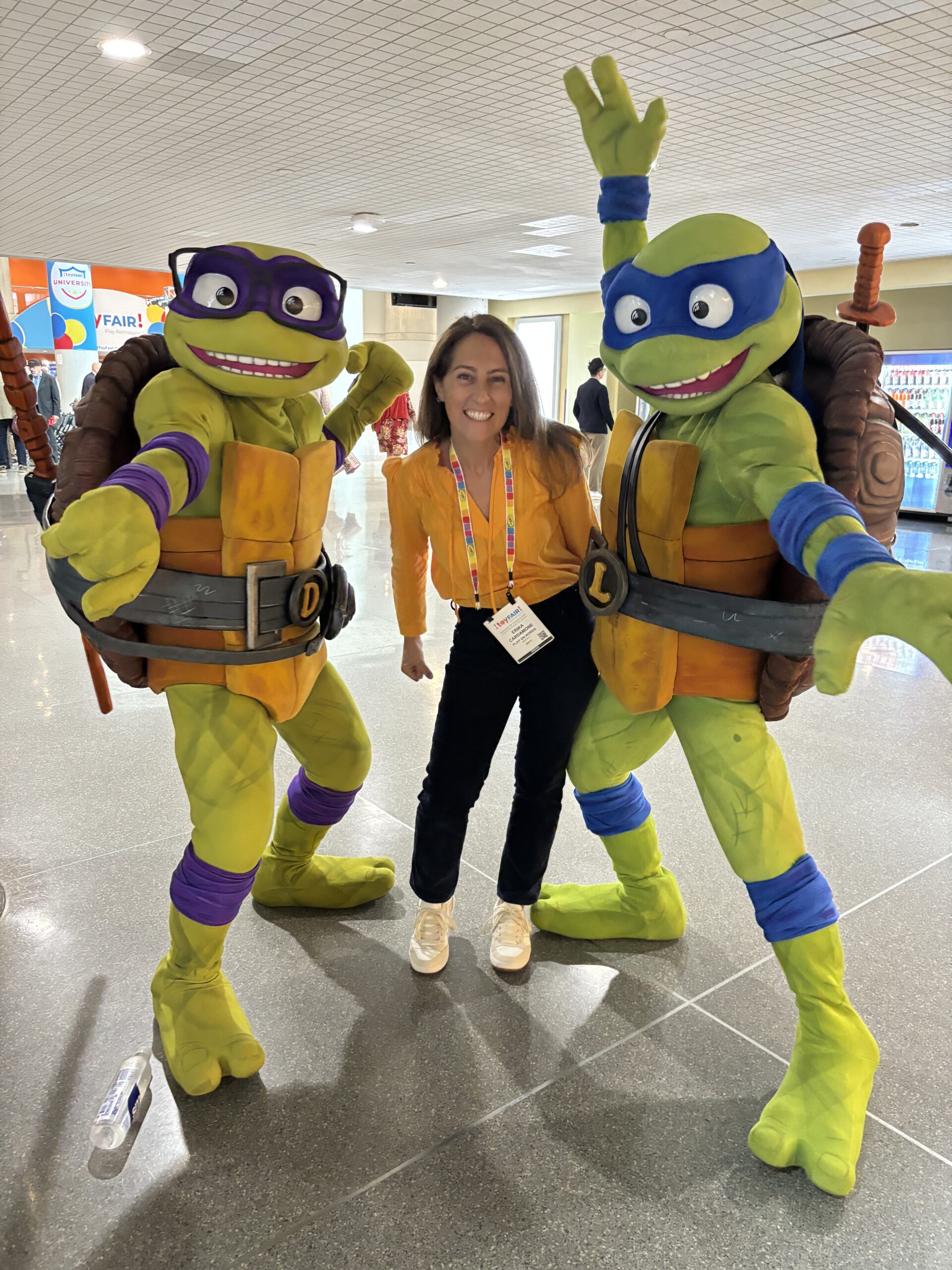
  • Teenage Mutant Ninja Turtles Clash Alley Strategy Game by Wonder Forge
  • The Ant and the Grasshopper by Rebecca Emberley and Ed Emberley
  • What’s It? By Peaceable Kingdom
  • Wummelbox by Wummelbox


PRE (READING): Searching for a word written in the round, spinning the alphabet with associated pictures or listening to an early reader popping up tall and high, children can pick up essential skills to promote reading.


  • ABC Puzzle And Book: My First Puzzle Book by Tiger Tales
  • Alphabet A-Z by Plan Toys
  • Block Crayon 3-in-1 Activity Table by Wooky Entertainment
  • Loco Lingo Kindergarten by HABA
  • Pig Has a Plan by Ethan Long
  • See ‘n Spin Alphabet Rack by B kids
  • Up! Tall! And High! by Ethan Long
  • WordARound by Thinkfun


STORY-TELLING/ PRETEND PLAY: Whether protecting Fort Brave from the outlaws, engaging in realistic puppet play, or taking the ferry boat out for a sail, children enter the world of pretend, creating their own stories with plenty of flexible props to guide their imagination. Oral story-telling precedes writing as kids learn the steps to create a good narrative.


  • A Home For Bird by Philip C. Stead
  • Alpaca Puppet by Folkmanis, Inc.
  • Artzooka! Cupcake Creations by Wooky Entertainment
  • Artzooka! Recycle Sticker Creations by Wooky Entertainment
  • Artzooka! Surprise Match Boxes by Wooky Entertainment
  • Bebe Bath and Accessories By Corolle
  • Bible Toys Prayer Bear
  • Easy Turn Coupe by Step2
  • Fairy Tale Blocks by Plan Toys
  • Ferry Boat by Green Toys
  • Fire Engine by Plan Toys
  • Fixin’ Fun Outdoor Grill by Step2
  • Friends Heartlake City Pool by Lego
  • HABA Puppet Theater
  • Imagine i CAN Feel Better MD by Manhattan Toy
  • Imagine i Can Pirate Treasures by Manhattan Toy
  • Leopard Shark Puppet by Folkmanis, Inc.
  • Little Hedgehog Puppet by Folkmanis, Inc.
  • My 1st Career Gear Zookeeper by Aeromax Inc.
  • My Little Nenuco Travel With Me by Famosa
  • Parking Garage by Plan Toys
  • Pinypon Fairies by Famosa
  • Playmobil 1.2.3 Take Along Barn
  • Playmobil 1.2.3 Take Along Fire Station
  • Playmobil Native American Camp With Totem Pole
  • Playmobil Western Fort
  • Rocket by Green Toys
  • Sky Dragon Puppet by Folkmanis, Inc.
  • SmartMax Flower Palace by Smart Toys and Games, Inc.
  • Tractor by Green Toys
  • WOW’s Sammy Sea Patrol by Ravensburger


SOCIAL LANGUAGE: Pairing closely with pretend play, social language blossoms when children play with toys that encourage extended social interactions. Working cooperatively to follow the instructions of a magic move wand, or racing mice to capture a huge chunk of cheese before the cat stops them promotes one-on-one interaction.


  • Magic Moves Electronic Wand by Educational Insights
  • Lilliputiens’ Ophelie And Her Chicks by HABA
  • Penguin And Pinecone by Salina Yoon
  • Puppet on-a-Stick by Educational Insights
  • SQUIGGLE On-The-Go by Randomline, Inc.
  • Super Sized Floor Puzzle USA Map by Ravensburger
  • The Great Cheese Chase by Peaceable Kingdom


Congratulations to our PAL Winners who are listening to their markets and delivering a powerful value proposition, namely, great language learning paired with play.

To see all Playonwords PAL Award winners, go to:
http://playonwords.com/award/

Posted in Uncategorized | Leave a comment

Wordless Picture Books Can Teach More Language

61ayvM3949L._SX285_Last week research came out from the University of Waterloo finding that children hear more complex language from parents when they read a storybook with only pictures compared to the traditional picture vocabulary book. They recorded moms reading to their toddlers both types of books. ”What we found was that moms in our study significantly more frequently used forms of complex talk when reading the picture storybook to their child than the picture vocabulary book,” said Professor O’Neill. They found that mothers often related the picture to the child’s experience or asked them to predict what might happen, both of which build language through higher level thinking.

As speech pathologists we know this to be true. When I speak to new moms groups about reading to their babies, I always tell them to talk about the book, not just read it. I suggest they “Hang out on a page,” which is just what this research is suggesting. Describe the picture, talk about what the animal is doing, where did you see that animal around our neighborhood, what will he do with the nut? etc.

Talking about the connection from one page to the next is fun too. I just picked up a new book, “Green” by Laura Caccaro Seeger which is a Caldecott Honor book for good reason. Exploring all the shades of green and what resides in those habitats, the author also links one page to another with cut outs that become something new on the next page. Leaves jutting out from a tree in “forest green” become little fish following a “sea green” turtle in the coral reef. These cutouts provide a wonderful opportunity for prediction, as kids guess that the section of “lime green” lime might turn into the ladle of a spoon holding “pea green” peas. Take up the challenge of picking up this almost wordless book and provide some enhanced language to feed to your child!

Posted in 3-6 year-olds, 6-8 year-olds, Books, Elementary School Age, Strategies to Encourange Language Development | Leave a comment