I was talking to my daughter-in-law today and she asked me if I wanted an idea for a Christmas gift for the kids. Of course I said, “Yes!” I had just been talking to another grandma who had a toy catalogue in her hand for advice but also said she wasn’t going to buy anything the kids didn’t want. With everyone being cautious about spending this year, we don’t want to buy toys or games that won’t be used.
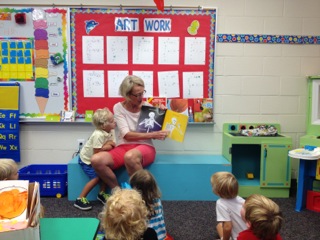
Anyway, Katie asked if we would like to buy a year’s membership in their children’s museum for the kids. I loved the idea. The membership at the Children’s Museum of Wilmington in North Carolina includes many free classes including holiday crafts in the Art Room, “How the Grinch Stole Christmas” storytime by local celebrities, The Cat in the Hat Games (which are REALLY fun by the way), and letters to Santa.
In Connecticut, you know I love The Stepping Stones Children’s Museum in Norwalk, CT. Get a Stepping Stones passport and get it stamped each month as programs present a different country with activities and performances highlighting characteristics and traditions from that country. November is Australia. The next Family Fun Night features Winnie the Pooh for dinner and pictures with Pooh himself. Come to interactive story times and meet the authors.
Another great idea for holiday gift giving by grandparents is to give a year’s subscription to a children’s magazine. My favorites are from National Geographic Kids and The National Wildlife Association. Check out the magazines by age of the child you are giving them to. “Your Big Backyard,” “Animal Baby” and “Ranger Rick” are all favorites with kids.
As a speech therapist, we have to be flexible and follow the child’s lead and interests even on the best planned day.
Yesterday, I carried two stuffed bags of toys into the home of 3 year-old Duncan. I had printed out pictures of /k/ words for articulation therapy. I thought he would enjoy cutting and pasting them on cards and loading and dumping them in my variety of trucks. Well, he took a liking to my Fisher Price garbage truck and before we could paste any pictures he was enjoying crumpling them up and loading up the truck, shutting the back to the crunching sound, and hauling them off to the dump!
I got so many responses to my naming the pictures, handing them to him, and his stuffing them in the garbage truck. Of course the pictures didn’t survive more than one session but that way okay. We did what Duncan wanted to do that day and he was full of language as a result!
My search for Halloween books that are simple, funny and have lots of language to discuss brought me to two more books that might be helpful to you.
Skeleton Hiccups by Margery Cuyler is a favorite as the skeleton goes through his day, waking up, taking a shower, brushing his teeth and polishing his bones, as his hiccups continue–hic, hic, hic. Each double page is so simple but there is plenty to talk about as his arm comes off while polishing or his jaw flies out as he brushes his teeth! Ghost helps out with several suggestions like drinking upside down and holding his breath. Finally, ghost reaches into his old trunk to get just the right thing to end the hiccups.
T. Rex Trick or Treats by Lois Grambling takes us through the tough process of T. Rex deciding on a Halloween costume. With lots of words in bold for pre-literacy such as EEK and SCARY, this book draws the kids into the story. The illustrations are cute, especially of his dream of being a bat or a black cat with whiskers taped to his nose!
I hope you all have your costumes picked out! Happy Halloween.
Recently, as I was looking on the internet for games to play with my kids on the autism spectrum, I came across autismgames.org, a wonderful site engineered by speech pathologist, Tahirih Bushey.
Her site and blog encourages parents and specialists to learn about how to use games to teach children on the autism spectrum. According to her website it includes:
- Games that will engage young children with ASD in play
- Videos of kids and families playing the games to model play and imitate
- Tips on how to make the play more fun and educational
Halloween is a fun time of year for kids and an easy theme to introduce into therapy. Today I want to share a few books on that theme that are simple, yet fun and can be incorporated into a language or articulation lesson.
Last week I went to the home of my little friends on the autism spectrum. Books aren’t always his favorite activity and I try hard to find stories with simple, funny, stories linked to his experiences. First we popped popcorn in a pot with a glass lid. What fun to see the kernels pop and overflow, just like the story, Popcorn, by Frank Asch. We took pictures of the steps so we could order them later in re-telling our activity. Then we read the book and took advantage of all the opportunities to ask wh-questions relating to the pictures supporting the story, and describe the action, especially on the party page.
Sheep Trick or Treat by Nancy Shaw begins with “As the Halloween moon rises, sheep are fixing up disguises.” These well costumed sheep go trick or treating through the farm and encounter some wolves on the way home. Good thing they are dressed up to scare their enemies and arrive home safely to eat their treats! Shaw’s clever series of sheep stories in rhyme are great for pre-literacy skills as well as articulation practice with the /sh/ sound.
Aaaarrgghh! Spider! by Lydia Monks is one of my favorites for the season. This tale is about a lovable, persistent spider who wants to be adopted as the family pet. It is a good story to talk about feelings and associated facial expressions of surprise, fear, happiness and excitement.
Apples and Pumpkins by Anne Rockwell is another seasonal book that is a simple, concrete story about the experiences of going to the farm and picking apples and pumpkins, and returning home to carve the pumpkin and go trick or treating. This book could be used as a social story for children on the autism spectrum before a fall field trip, pumpkin carving or trick or treating.
If you work with children on the autism spectrum, please let me know what books have been interesting to your little clients. I would like to develop a list to share with other speech therapists and parents. You can comment below or e-mail me directly at sherry@playonwords.com. Thanks!
I recently heard from a mom who had a question about her child’s ability to learn letters and colors since she is raising her bilingual:
Hi Sherry,I have a small concern and I was wondering if you could help. As you know, I’ve been raising my daughters bilingual. Katerina will be three in September and she’s always been ahead on most developmental milestones, but now I see that her classmates can identify the letters in the alphabet and know all their colors and she doesn’t. She’s self conscious about it as well. I try to work on them at home with her, but she loses interest quickly. Is it common for this to happen when she’s been doing so well? Any pointers?~Carol
Having worked in the public and private schools for over 20 years, and now in private practice, I still feel like I am going back to school in September. I remember getting all the class lists, schedules, changes in schedules and putting together my caseload list. Next, get my schedule approved by all the teachers and start in right away working with the kids. Whew! Makes me sweat just thinking about it.
As speech therapists know, who work in or outside the schools, one of the critical aspects to progress is child and parent participation outside the classroom. It has been my experience that this is harder to manage as a school clinician versus one in private practice (partly because I work in homes and SEE the parents every time) but I worked very hard to implement carryover when I was a school therapist.
I find that I can set up charts, take home communication books, games and offers of prizes for practice but the key element for carryover outside the therapy session is the parents’ involvement. Something that worked well when I was a therapist in the public and private schools was to invite the parent to observe a therapy session so they could see what and how we were working on their child’s goals. I know some districts have gotten stricter about allowing observations since others might be grouped with their child but it is worth trying to work it out with your administration. When parents see how you are getting the correct speech or language output and how to make it fun for some daily practice, they are more apt to be involved. After an observation, some form of communication book to pass back and forth from school to home helps maintain the carryover.
Let me know in the comments below, what works for you to get the parents involved and kids practicing outside of the therapy room? What excited your kids to practice between sessions?
I was at a house this week where a clever mom decided to re-do the playroom. She took all the costumes for pretend play out of the wooden chest where they were ignored and hung them on hooks for ready play! I asked my 4 year-old friend who he would like to be and he pointed to the fireman’s jacket. We snapped him into his coat, gave him his hat, handed him his inflatable hose and we were off to put out a fire. Mom and I had the ax, fire truck, walkie talkie and fire extinguisher.
But where was the fire? He pointed to a pop up hut and said at that house. I pointed out to mom that having a structure for pretend play will encourage creativity, whether it is a cardboard box big enough to fit some preschoolers, a kids’ pop up tent or hut, or some floor mats that are flexible enough to form into a house. Use that structure for your doctor’s office, barber shop or house on fire.
You can pick up children’s costumes at Halloween time, at tag sales or on the Internet any time.
I am working with a number of 2-3 year-olds who will be starting preschool in the fall. Moms are already panicking and worrying about how their kids will adjust. Here are a few a tips for parents to help make a smooth transition to preschool, beginning with making a list of helpful information to share with your child’s teacher:
- Start making a list of gestures, words, or phrases that your child uses to communicate. One little guy says, “Eee” when he wants something, another says, “Reach.” After each verbalization, note what he means and in what context he uses it. This will help his teacher to decipher what he says and make him feel understood and comfortable in his new setting.
- List behaviors and how your child typically reacts and what is effective in helping her comply. Often preschoolers with a speech delay have adopted certain negative behaviors in frustration for not being able to talk like their peers. When a request seems too hard, they may turn their head or scream out of frustration. Share with the teacher how you manage those behaviors so you and the teacher are consistent in your approach.
- Meet with her teacher to talk over your list. The more her teacher knows your child, the better the launch to school will go.
- Keep communication open. As your child grows in her ability to communicate–now she can use 2 or 3-word phrases–share that with the teacher. So many times I go to observe one of my preschool clients in their nursery school, and the teacher is not requiring enough of them because she doesn’t know they can speak that way. “Oh, she can say THAT??” Yes, and model and wait for that level of language.
- Visit your child’s school with her so she can feel comfortable in the surroundings and meet her teacher
- Finally, have a big smile on your face the first day, give a confident kiss, say goodbye and leave quickly
Recently the National Early Literacy Panel (NELP) examined scientifically based research on what factors were influential in predicting literacy in children. They looked at what skills were taught before kindergarten that would contribute to successful readers when kids entered school. In examining the literature, the panel also determined what type of intervention was most effective in teaching early literacy skills to children.
Here is what they found, according to an article in Advance Magazine:
“Language Areas Related to Later Literacy Skills:
· Alphabet knowledge
· Phonological awareness (the ability to understand that words are made up of a sequence of sounds)
· Rapid automatic naming of letters and digits
· Rapid automatic naming of objects and colors
· Writing or writing name
· Phonological memory
Language Areas with Moderate Correlation to Later Literacy:
· Concepts about print
· Print knowledge
· Reading readiness
· Oral language
· Visual processing”
This information can be helpful in sharing with parents when they often ask how important it is for their 2 year-old to know his letters or what they can do to help prepare their child for reading. In addition, we as speech language therapists can incorporate these skills into our activities whose primary goals are to build speech and language.